


Humanity’s return to the Moon is far more than a symbolic milestone; it is an unprecedented technological challenge that sees Europe and Italy at the forefront. As the Orion spacecraft continues its journey in lunar orbit, Zoppas Industries Heating Element Technologies solidifies its role as a strategic partner in space exploration. Our technology is an integral part of the European Service Module (ESM), the mission’s vital component designed by the European Space Agency (ESA).
The European Service Module: Orion’s Engine
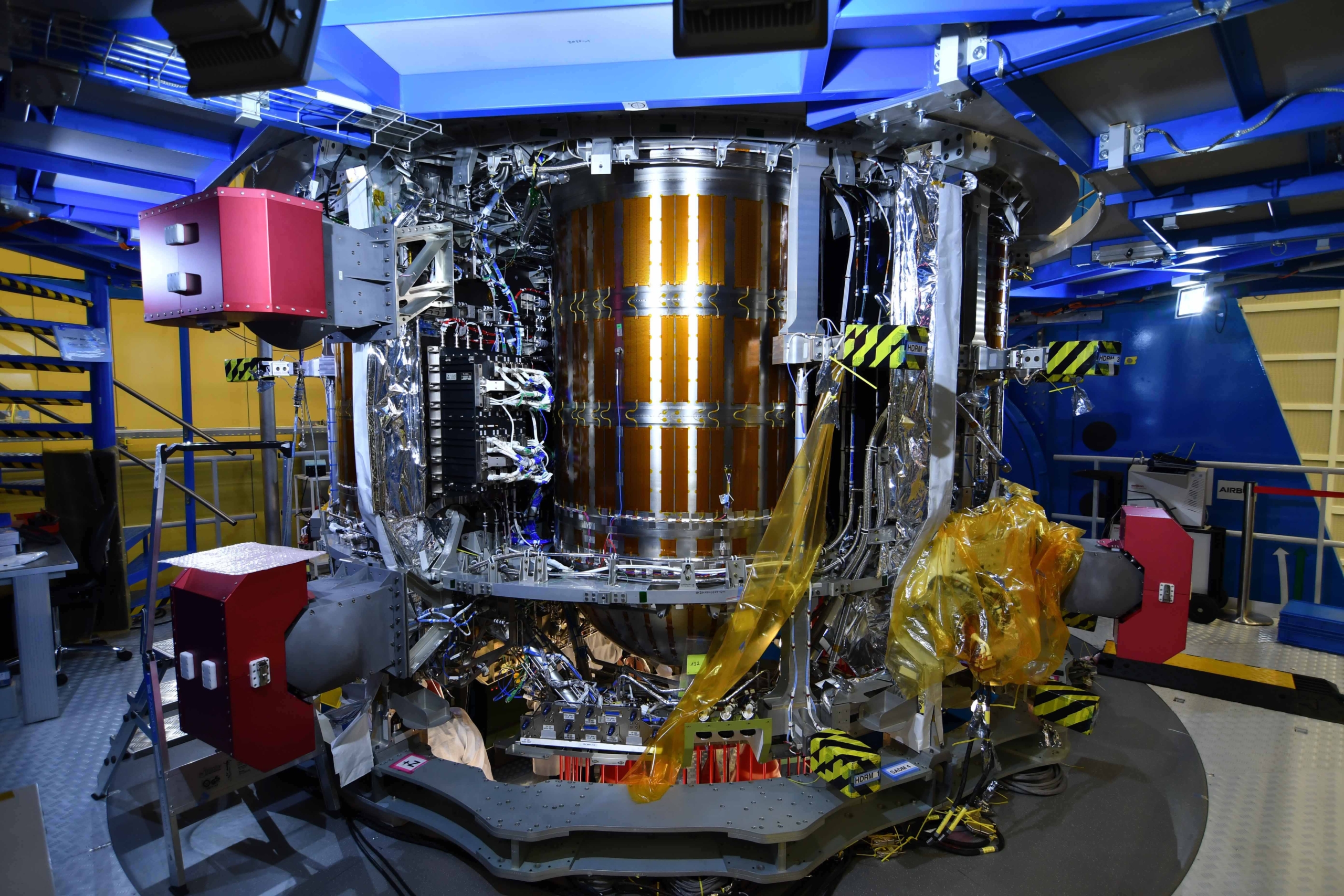
The ESM is not merely a support module; it is the “beating heart” that ensures the survival of both the spacecraft and its crew. It performs critical functions where there is no margin for error:
- Propulsion: Providing the necessary thrust for orbital maneuvers and course corrections.
- Life support: Managing the supply of water and oxygen for the astronauts.
- Power management: Regulating the distribution of energy generated by the four solar array wings.
- Thermal control: Maintaining delicate electronic systems and propellants at constant operating temperatures.
Iconographic Credits: Images of the Orion mission and the ESM module are provided by ESA–A. Conigli and are used for informational purposes only to document the European technological contribution to the Artemis program.
The Challenge of thermal control in space
In the vacuum of space, surfaces exposed to direct sunlight can reach extreme temperatures, while those in shadow plummet toward absolute zero. In such an environment, thermal stability is a fundamental prerequisite for structural safety.
Zoppas Industries met this challenge by supplying over 3,000 specialised heaters, specifically engineered to operate under vacuum conditions and cosmic radiation. These components perform three key functions:
- Fluid freeze prevention: They ensure that onboard propellants and fluids remain in a liquid state, preventing critical blockages within the conduits.
- Protection of sensitive electronics: Navigation and communication circuits require an extremely narrow temperature range to function with the precision necessary for atmospheric re-entry.
- Integration into complex architectures: Each heating element is the result of precision engineering, developed to minimise weight and maximise energy efficiency while adapting to the ultra-compact geometries of the ESM.
A commitment beyond Earth’s orbit
Participation in the Artemis mission demonstrates Zoppas Industries’ ability to translate decades of experience in industrial heating into cutting-edge aerospace solutions. Being on board Orion means contributing directly to the creation of sustainable infrastructure on the Moon, laying the groundwork for humanity’s next giant leap toward Mars.