


Electric heaters and thermal control systems for satellites
Even in extreme conditions
Where temperature pushes the limits of space, Zoppas Industries Heating Element Technologies (ZIHET) ensures stability, reliability and safety.
(Italiano)
Since 1992, we have been developing electric heaters for satellites and spacecraft, designed to ensure flawless thermal control even in the most extreme conditions. Our thirty years of experience have enabled us to take part in more than 150 space missions and to install our heaters on over 1,000 satellites, used in scientific, commercial, institutional and defence missions. Every year we produce more than 20,000 new heaters for the space market.

Zoppas Industries heaters are found on every platform orbiting in space: from Earth, planetary and astronomical observation satellites to telecommunications and internet coverage satellites; from crewed mission spacecraft to launchers. We manage the entire process, from heater design to manufacturing, through to testing and validation.

The new challenges of the Space Economy
In the space sector, customers face complex challenges every day:
- the need to reduce procurement costs and lead times,
- compliance with stringent international regulations,
- management of global supply chains,
- the difficulty of ensuring reliability and operational continuity in long-duration missions.
The Zoppas Industries response
Immediate availability and continuity of supply
Thanks to a pre-tested COTS portfolio and a global, diversified supply chain , we guarantee ready-to-use thermal components, available in extremely short lead times , with constant availability of materials even for complex programmes.

International compliance and reduced technical risk
We offer our customers proven technologies , internationally recognised and ESA-approved. This makes it possible to shorten approval times and minimise risks, relying on components already tested to operate in extreme conditions.

Scalability and flexibility at every stage of the programme
Our technologies are available both in a fully ESA-qualified (ESCC) version and in an “Enhanced Grade” version (compliant materials and processes, with streamlined validation testing): the latter can be adopted in institutional, commercial and university research programmes, rapid prototyping, environmental testing and complex flight models, offering the customer dedicated lines and customised configurations for high-volume production.
Global footprint
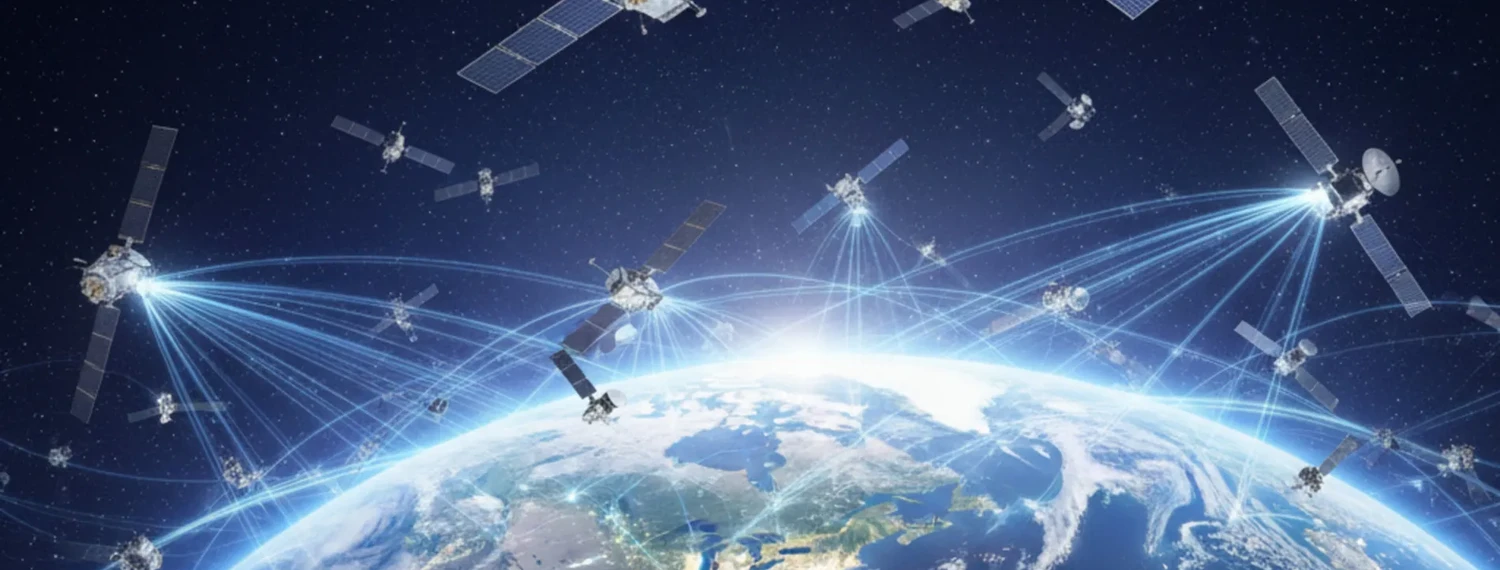
As an international supplier, we operate with a structured regional presence in EMEA, North America and APAC. Our global procurement network ensures continuity even in complex geopolitical scenarios, guaranteeing a local for localapproach. This combination of accessibility, multi-application compliance, scalability and risk reduction makes Zoppas Industries a strategic partner for anyone who needs to design, integrate or qualify thermal systems for space, in a context where every delay, every unexpected event and every inefficiency can jeopardise an entire mission.

Zoppas Industries heaters for the space sector:
“Beyond the sky”

Unique on the market
Our heaters are the only ones certified by ESA and compliant with the rigorous ESCC and ECSS standards for thermal control components and systems.

Ready-to-use and co-engineered heaters
Our flexible foils are ready to use or can be customised according to their intended application, always ensuring flawless operation.

Assemblies, systems and integration
Not just heating elements, but also assemblies (for example with sensors and connectors) and functionalised systems, conceived and developed for any space platform.

Multi-layer heaters
On request, we design single or dual circuit heaters and multi-layer configurations, to ensure operational continuity even in critical situations.

Progress as our guiding principle
ZIHET technologies are driven by constant study, research and experimentation. In our vision, excellence is a process, not a state.
Our main heating technologies for space


Applications
Piping
FEP polyimide strip heaters specifically designed to be wrapped around pipes, to prevent freezing and condensation of the propellant or fluid inside HP, LHP and CPL loops.
Propulsion Systems
Flexible polyimide electric heaters integrated on tanks, valves and thrusters, to ensure proper propellant flow and optimal operating conditions.
Batteries
Flexible heaters are integrated into the batteries to heat only specific areas within the battery pack, enabling targeted temperature control.
Electronic Components
Flexible polyimide heaters mounted directly on the housings, to ensure efficient circuit performance and reduced thermal stress, extending component life and improving overall system reliability.
Mechanisms
Mechanisms and motors for antenna pointing, panel positioning, robotic arms and actuators, such as reaction wheels, momentum wheels, gimbals and control moment gyroscopes (CMG).
Thermal Fluid Loop Control
Flexible polyimide heaters integrated on valves, evaporators, condensers and reservoirs to facilitate and control the activation and maintenance of the fluid loop.
Optical Elements
Miniaturised, shaped flexible heaters designed to fit perfectly onto the optical elements of radars, lidars, cameras or the spacecraft’s attitude and orbit control system (AOCS).
An expanding universe of cutting-edge solutions
Our flexible heating foils are the perfect combination of technology, reliability and versatility. Available in a range of configurations, they ensure precise thermal control for every type of space application.
Key advantages:
- Adaptability to curved or irregular surfaces.
- Low weight to minimise footprint and launch costs.
- High resistance to mechanical and thermal stress and to interplanetary radiation.
- ESA certification; compatibility with NASA/JAXA/ISRO/KARI standards.
In this context, our ability to develop both standardised and customisable technologies with certified reliability is a distinctive and essential value for our customers.
From initial concept to final assembly, our technical team develops tailor-made thermal technologies to ensure:
- Maintenance of the ideal operating temperature of electronic units and sensitive instruments.
- Prevention of component freezing in orbit.
- Maximum thermal efficiency and long service life.
- Operational safety in orbit and in critical environments.
- Extreme durability, validated by extensive resistance and thermal stability testing.
Product Certification

ESCC 4009/002
ESCC 4009/004


